When do you need urgent help?
Call emergency services for sudden chest pain or pressure that does not go away, severe difficulty breathing or loss of consciousness. Act straight away even if you have had panic attacks before. Seek medical assessment after a first or markedly different episode, even if you feel better.
What can a panic attack feel like?
Symptoms can come on suddenly, even somewhere familiar. As the episode eases, you may feel tired and want to keep checking how your body feels.
- Your heart races, your hands shake or your palms sweat.
- Breathing can feel difficult, or you may feel dizzy or nauseous.
- You may fear losing control and want to leave or call someone.

Yav in the institute’s framework means bodily sensations, circumstances and their effect on your day. An attack can happen without an obvious trigger. A doctor asks how it started and considers other possible explanations, including physical conditions and the effects of medicines or stimulants.
There is no single known cause of panic disorder. Family predisposition and stress may play a role, but they cannot explain every individual attack.
Why can panic attacks come back?
The body’s reaction can feel like a sensitive alarm. You notice a racing heart, get frightened and start checking it again. Anxiety can intensify sensations, while repeated checking and avoidance can reinforce the fear of another attack.
| What adds pressure | What you can do |
|---|---|
| “It came back, so nothing helped.” | Note what has changed since the last episode and discuss it with your clinician. |
| “I have to keep checking my pulse.” | Follow your clinical plan for a familiar episode. Afterwards, note how it unfolded. |
| “It is safer to stop going out.” | Tell your clinician which places you have started avoiding. Discuss a gradual return together. |
Feeling frightened is human. You can ask for help even if you do not yet know what triggered the attack.
What can you notice in your own experience?
Nav in Alexander Zharkov’s framework means past experience, learned rules and family patterns. The institute uses “a breach in your boundaries” as a metaphor for moments when someone else’s urgency or anxiety sets your pace and it feels hard to ask for a break. A doctor assesses the medical causes of an attack.
- What was happening before you noticed the first sensations?
- What made it hard to ask for help or a break?
- What rule came to mind?

What can you do during a familiar attack?
If a doctor has assessed episodes like this, start with the plan you agreed on. When you are somewhere safe, you can try three grounding steps.
- Sit somewhere supported. Put your feet on the floor and rest your hands on your thighs.
- Breathe at a comfortable pace. Avoid forcing a deeper breath or holding it.
- Look around. Silently name the colour of one object, then notice the surface under your feet.
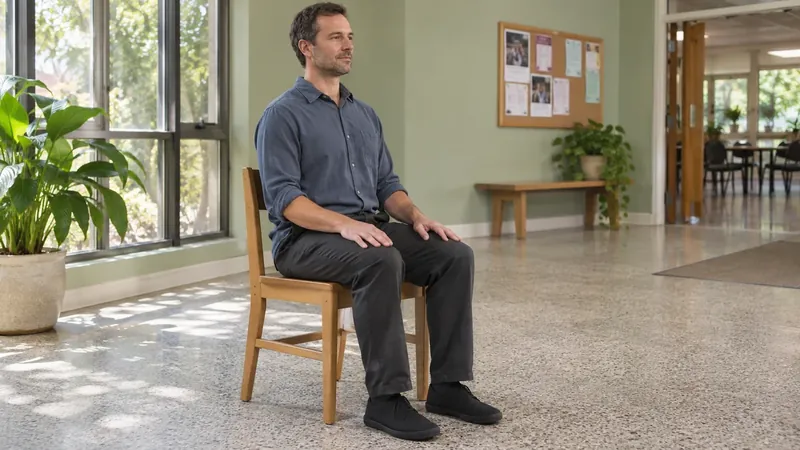
Stop if the exercise increases discomfort. Call for emergency help if warning signs appear.
How can you regain steadiness in daily life?
Prav in the institute’s framework means choosing your next direction. In daily life, that can mean setting boundaries about when to pause, who to ask for support and which responsibilities you can discuss.
- Make a brief note of the timing, sensations and circumstances. Add anything you have started avoiding.
- Choose someone you can tell what support you need, such as sitting with you quietly.
- Agree with your clinician on what to do if symptoms return and when to arrange a follow-up.
For separate work on daily habits and boundaries, see the 40-day programme. If recurring attacks are your concern, start with a doctor.
How is panic disorder treated?
One attack alone does not mean you have panic disorder. A doctor considers whether unexpected attacks recur, whether fear of another one persists and whether it changes everyday life.
Cognitive behavioural therapy (CBT)
CBT looks at how you interpret bodily sensations and which responses keep fear going. With a therapist, you can gradually return to activities you have been avoiding. If attacks come back, explain what has become harder and which skills helped before.
When a doctor may recommend medication
A doctor may recommend medication, including antidepressants, based on your symptoms, previous treatment and preferences. Ask when you might notice an effect, which side effects to discuss and when to follow up. Agree any dose change or stopping plan with the prescriber.
| Support | What it covers |
|---|---|
| Healthcare and psychotherapy | Assessment of possible causes, treatment choices and follow-up. |
| The institute’s author-led work | Exploring a specific life situation, learned rules and personal boundaries. |
Katerina’s personal account
Katerina recorded her testimonial inside a car. She talks about feeling rushed and noticing changes in daily life during the 40-day programme. She describes being able to express her thoughts more clearly and deal with everyday problems more calmly.
This is a personal account of everyday wellbeing. Katerina does not discuss panic attacks or their treatment in the recording.
Katerina, wearing a black jacket, records her video review of the 40-day programme inside a car.
Questions about treatment and recurrence
Why can a panic attack start without an obvious cause?
An attack can begin without an obvious trigger. Tell your doctor how it started and what you felt so they can assess possible explanations.
Can a panic attack wake me up at night?
Yes, an attack can start during sleep and wake you. Tell a doctor if it is your first episode or it keeps happening, and call for emergency help for severe breathing difficulty or other warning signs.
What if attacks come back after treatment?
Contact your clinician and explain when the episodes returned and what you have started avoiding. Mention any changes in symptoms or recent changes to medication.
What can I discuss with the institute if I am unsure where to start?
Choose one situation from daily life, such as asking a loved one for a break. Discuss symptoms and treatment with a doctor.
Where can you start exploring your situation?
If you want to understand why it feels hard to ask for a break or support, start with one conversation. Quantum Diagnostics is an individual consultation using Alexander Zharkov’s framework for past experience, present circumstances and the next step.
Individual text consultation · €30. Continuing with a programme afterwards is optional.
How the personal consultation works