When do you need urgent help?
Call local emergency services if palpitations do not go away or come with chest pain, breathlessness, feeling faint or fainting. Sudden chest pain or pressure that persists, or severe breathing difficulty, also needs emergency care. If those warning signs have stopped, still seek urgent medical assessment.
What can an episode feel like in your forties?
On the tram you feel hot, your heart pounds and your hands shake. When the tension eases and you are ready to get on with your day, note what you felt first and how long the episode lasted.
- Your heart races or pounds harder than usual.
- Sweating, shaking or dizziness may come with the fear.
- Afterwards, you may keep checking your pulse or avoid journeys where it has happened before.

Yav in the institute’s framework means what you can observe in the present. Note what you felt, where you were and how the episode affected your day.
How can periods change in perimenopause?
Perimenopause is the transition to menopause. Periods may become irregular, and hot flushes, night sweats and sleep problems can begin while you still have periods. Tell your clinician if these changes overlap with an episode. Timing alone cannot establish its cause.
What should you discuss with a clinician?
For a first or unusual episode, start with your GP or primary care clinician. If your periods have changed, mention it there or discuss it with a gynaecologist.
| What you noticed | What to discuss |
|---|---|
| Periods changed and hot flushes began at 40–45 | A clinician may consider an FSH blood test. After 45, typical symptoms and menstrual history usually guide the assessment. Mention any hormonal medicine or contraception you use. |
| Your periods have become much heavier | Say how long this has been going on and whether you feel tired. Your clinician may check a full blood count for signs of anaemia. |
| Palpitations keep happening | Describe how they start and whether they occur during exertion. Your clinician will decide whether you need an ECG or other tests. |
Why can the fear return?
You notice a heartbeat, worry about another attack and start watching every sensation. That can increase tension. Think of a sensitive alarm: it gets your attention, and you still need to find out what set it off.
| Unhelpful pressure | What may help |
|---|---|
| “Just put up with it” | Note how it started and choose someone to discuss it with. |
| “It must be hormones” | Note changes to your periods and describe the palpitations separately. |
| “Check your pulse for the rest of the day” | For a familiar episode, follow the plan you agreed with your clinician. |
It is understandable to feel scared. You can ask for help before you know what caused it.
What can you notice in past experiences?
Nav in Alexander Zharkov’s approach means past experience, learned rules and family patterns. His metaphors of breached boundaries and taking on other people’s stress describe how someone may absorb others’ urgency into their own schedule. The institute uses this language to explore personal boundaries.
- What happened the day before: disrupted sleep, a new urgent task or a difficult conversation?
- Which request do I find hard to leave until tomorrow?
- What rule comes to mind when I consider taking a pause?

What can you do during a familiar attack?
If this is a familiar episode and you have agreed a plan with your clinician, follow it. In a safe place, you can try this brief grounding exercise from the institute’s Zhiva practice.
- Sit on a stable chair with both feet on the floor.
- Rest your hands on your thighs and breathe at a comfortable pace, without forcing it.
- Look at an object nearby and silently name its shape.
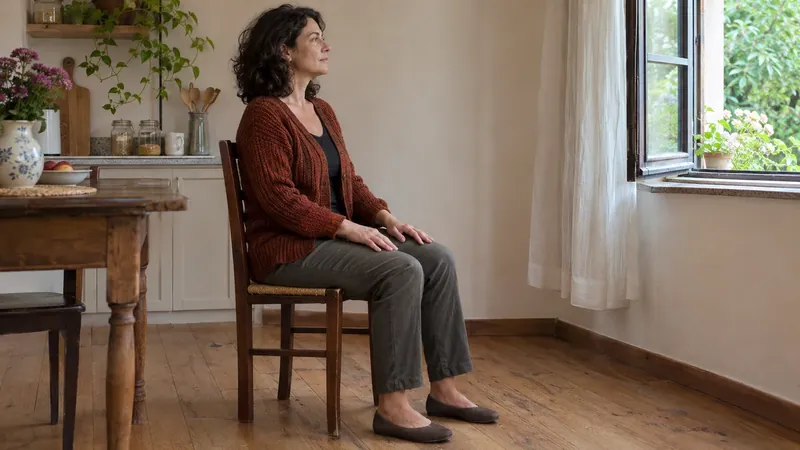
Stop if it feels uncomfortable. Call for help if you notice warning signs.
How can you feel steadier in daily life?
Prav in the institute’s framework means what you decide to change next. The institute uses “energy sovereignty” to describe noticing your boundaries and choosing a step you can manage.
- Make two short notes: one about the episode and one about periods, hot flushes and sleep. Approximate dates are fine.
- Ask your clinician what to do if palpitations recur and when to seek urgent help.
- Choose one request for this week. For example, ask someone close to you to take over an evening task before your appointment.
The institute’s 40-day programme explores everyday habits. Its six stages include exercises on paying attention to the body, emotions, thoughts and family patterns.
How can healthcare and the Zhiva approach fit together?
| Support | What it covers |
|---|---|
| Healthcare | Assessment of new symptoms, changes to periods and palpitations. If attacks recur, a clinician can help you find appropriate treatment. |
| The institute’s consultation | One everyday situation, learned rules and a manageable next step. |
Yaroslava’s personal account
In a video recorded inside a car, Yaroslava remembers how hard it was to get up in the morning and says that after the programme, waking up became easier and she felt like creating again. Her account is about her routine and how she felt. The video does not establish her age or the cause of those changes.
Yaroslava in her video testimonial about her experience of the 40-day programme.
Questions about panic attacks after 40
Why can an attack begin suddenly after 40?
A panic attack can come on suddenly. Hot flushes or heart rhythm problems may feel similar, so discuss a first or unusual episode with a clinician.
What should I note if palpitations wake me at night?
Note the time, duration and what you felt first: heat, skipped beats, breathlessness or fear. Seek immediate help if you notice emergency warning signs.
Do I need an FSH test if I still get periods?
At 40–45, a clinician may consider an FSH test when there are symptoms of the menopause transition, including changes to periods. Hormonal medicine and contraception may affect which tests are useful.
What can I bring to a personal consultation?
Choose a specific recurring situation, such as a request from a relative that makes you feel rushed. The consultation can help you put a response into words that fits what you can do.
How can you start a personal consultation?
Choose one recurring situation from daily life. Quantum Diagnostics is a personal consultation using Alexander Zharkov’s approach: what you learned from past experience, what is happening now and what you can do next.
Individual text consultation · €30. Continuing with a programme is optional.
How the personal consultation works